
Fleet Efficiency: Matching Pallet Sizes with Truck Dimensions in Vietnam
Contents
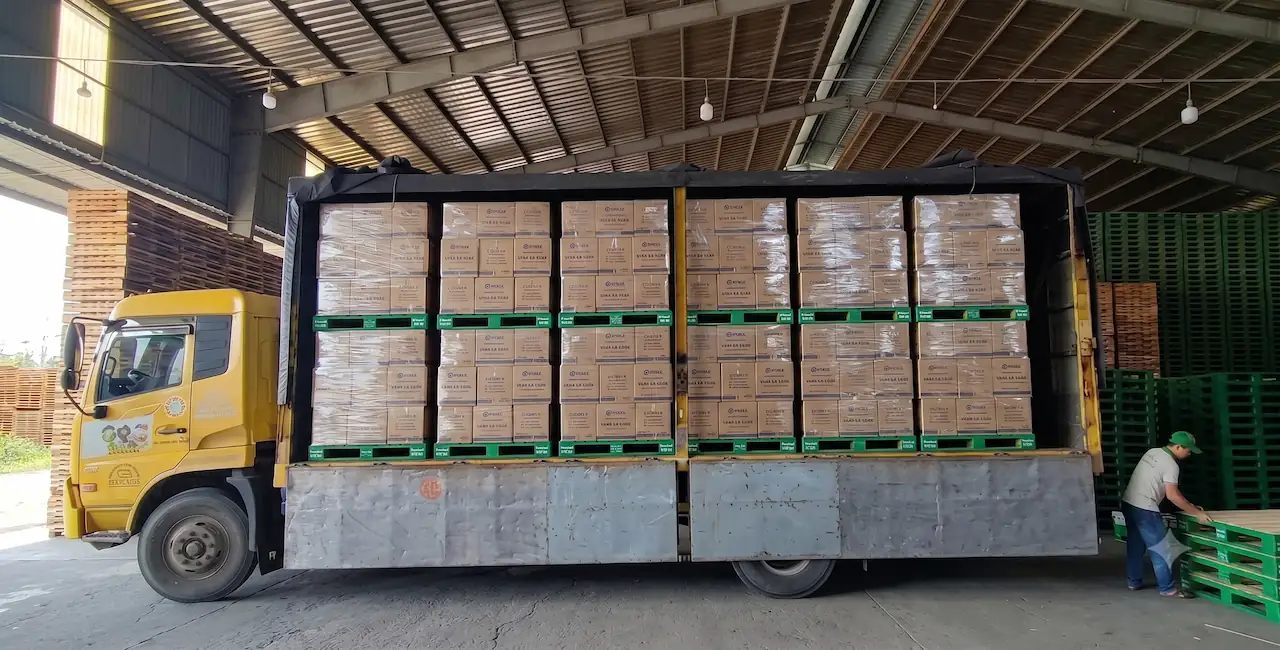
In Vietnam’s competitive logistics market, transport costs are usually calculated per trip or per full container load (FCL) rather than by weight. This creates a simple economic rule: the more goods you can safely fit into a truck, the lower your shipping cost per unit.
However, many manufacturers in Vietnam are wasting transport capacity. It is common to see containers or trailers legally capable of carrying 25–26 tons loaded with only 20–22 tons of cargo. The root cause is not the vehicle’s weight limit, but a mismatch between pallet sizes, stacking methods, and the inner dimensions of the truck.
To maximize fleet efficiency, companies must shift from random loading to calculated load planning. By matching pallet sizes with the vehicle’s internal space, businesses can significantly cut logistics costs and improve profit margins.
Standard Pallet Sizes in Vietnam
While the market uses various pallet types, transport infrastructure today is shaped by two main standards:
-
1000 x 1200 mm Pallets: The most common international standard for export cargo and industrial warehousing.
-
1100 x 1100 mm Pallets: The standard Asian square format, highly stable and exceptionally efficient for cross-docking hubs.
The challenge arises when loading these standard pallets onto Vietnam’s diverse fleet, ranging from interprovincial curtain-side trucks to 40ft High Cube (HC) container trailers. A mismatch of just a few centimeters can create empty spaces. Multiplied across thousands of trips each year, this wasted space results in massive hidden costs.
Pallet Stacking Methods for Maximum Trailer Volume
To optimize space, logistics managers should design stacking layouts based on the internal dimensions of standard trucks running on the North-South route.
Stacking Methods:
-
Column Stacking: Best for uniform, high-density goods. This method maximizes vertical load-bearing strength but requires high precision during loading to prevent cargo shifting.
-
Interlocking Stacking: The ideal choice for mixed cargo. This layout locks the load together, minimizes gaps, and resists lateral shifting caused by sudden braking or bumpy highways.
Weight Distribution Rules:
Authorities in Vietnam strictly enforce road weight limits through weigh stations. To avoid axle weight violations, businesses must distribute 60% of the cargo weight across the center area (occupying 50% of the length) of the trailer. This balances the vehicle’s center of gravity and ensures road safety.
Designing the Perfect Pallet Load
Transport efficiency begins with standardizing the load specifications on each pallet. To exploit the truck’s maximum internal volume, keep these three factors in mind:
-
Eliminate Cargo Overhang: Goods extending past the pallet edge prevent pallets from being packed tightly together. Products must fit entirely within the pallet footprint to ensure a perfect fit.
-
Balance Height and Stability: Vietnamese law sets a maximum clearance height of 4.5m for road vehicles (including truck and cargo). While taller stacks increase volume, they also risk tipping over. Plastic pallets offer superior structural strength, allowing for safer, higher stacking compared to wooden pallets that can warp from moisture.
-
Use Proper Dunnage: Instead of leaving empty gaps between cargo blocks, use dunnage bags. They secure the pallets in place, prevent physical damage during long-distance transit, and safely maximize vehicle capacity.
Why Plastic Pallets Boost Transport Efficiency
Using wooden pallets in Vietnam’s humid climate often introduces variances in thickness and quality due to moisture absorption, leading to uneven loading surfaces. This poses a direct safety risk during double-stacking.
In contrast, UPR’s industrial plastic pallets solve this issue completely:
-
Consistent Dimensions: Injection-molded designs offer absolute accuracy. This allows businesses to set up repeatable, uniform loading layouts that fit the truck bed perfectly.
-
Optimized Tare Weight: Plastic pallets are lightweight and do not absorb water like wooden pallets. Reducing the packaging weight allows you to load more actual product per trip without breaking legal weight limits.
-
Flat and Safe Surfaces: The uniform surface structure locks cargo layers tightly together, increasing the stability of stacked loads and reducing the time spent on complex strapping.
Conclusion
Advanced load planning is no longer just a warehousing task; it is a core business strategy. By matching pallet standards with truck dimensions, companies can eliminate wasted space, turning logistics from a cost center into a competitive advantage.
Partnering with UPR Vietnam brings standardized, high-performance pallet systems into your supply chain. When your pallet layout fits Vietnam’s transport infrastructure perfectly, you optimize every trip, cut logistics costs, and keep your cargo completely safe on every route.
Contact us for more information about our Pallet Rental service
Cho thuê Pallet và Kệ | Công ty TNHH UPR Việt Nam > Columns > Logistics > Fleet Efficiency: Matching Pallet Sizes with Truck Dimensions in Vietnam
 Zalo
Zalo  Tel
Tel  Contact Us