
Warehouse Safety①: Safe Forklift Operation Procedures Under EHS Standards
Contents
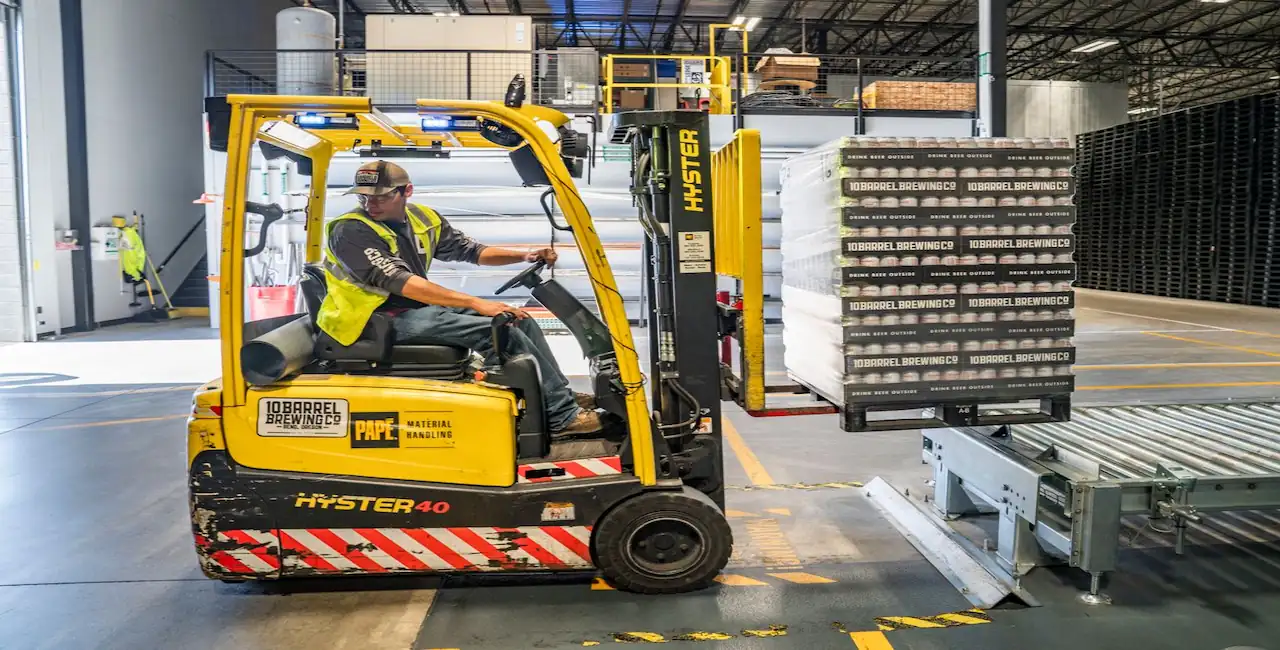
In Vietnam, the rapid development of the logistics industry has created a diverse warehouse operational landscape. The market currently witnesses the co-existence of two major types of material handling equipment: Internal Combustion (IC) forklifts, which dominate in manufacturing facilities and outdoor container yards, and Electric forklifts, which serve as the primary workhorse in enclosed warehouses, cold storage, pharmaceutical, and food processing facilities.
Regardless of the equipment used, maneuvering heavy loads in confined spaces always poses severe risks of occupational accidents. Shifting from a “reactive” model to “proactive risk management” requires businesses to implement a Forklift Operation Process based on EHS (Environment – Health – Safety) standards, structured around the 4 technical pillars below.
1. Competency Standards & Personal Protective Equipment (Health & Safety)
Human factors are the first link in the safety risk control chain. Forklift operators must fully satisfy legal, health, and personal protective equipment (PPE) requirements:
Professional Certification & Recertification Training:
100% of operators must hold a valid forklift operation certificate issued by an authorized agency under the Vietnamese Law on Occupational Safety and Health. Businesses need to conduct skill re-evaluations and update EHS procedures periodically (at least once every 12 months).
Personal Protective Equipment (PPE):
Throughout their shifts, operators are strictly required to wear complete PPE:
- Safety Helmet: Protects against impacts from overhead falling objects.
- Steel-Toe Safety Shoes with Anti-Slip Soles: Protect feet from crush hazards and chemical/grease spills on the floor.
- High-Visibility Vest: Enhances visual recognition in dimly lit areas or blind spots.
- Hearing Protection: Earplugs/earmuffs to reduce noise exposure when operating diesel forklifts in enclosed spaces.
3-Point Contact Rule:
When entering or exiting the forklift cabin, operators must maintain continuous 3-point contact (two hands and one foot, or one hand and two feet) on the handrails and steps. This rule eliminates the risk of slipping or spinal injuries caused by jumping off the cabin.
2. Technical Equipment Safety & Load Capacity Rules (Safety)
Inspecting the technical condition of the forklift before operation helps detect mechanical faults early, preventing sudden brake failures or fuel/electrolyte leaks.
Pre-operational Checklist
Operators must perform a quick 5–10 minute inspection and log it in the daily operational record for each equipment type:
- For IC Engine Forklifts: Check steering wheel play, foot/hand brake responsiveness, horn, reverse alarm, engine oil level, coolant, hydraulic oil, and fuel leaks under the chassis.
- For Electric Forklifts: Check battery capacity, wiring condition, charging connectors, electrolyte level (lead-acid batteries), and emergency power cutoff responsiveness.
- General Lifting Mechanisms: Check tire pressure, lift chain tension, and inspect forks for deformation or cracks.
Lockout/Tagout (LOTO) Procedure for Faulty Equipment
Upon detecting technical defects or fluid leaks:
- Immediately remove the ignition key, attach a warning tag stating “EQUIPMENT FAULTY – DO NOT OPERATE” (Tagout) to the steering wheel, and isolate the power source (Lockout).
- Report to the maintenance department and strictly refrain from operating the equipment without a formal technical sign-off.
Stability Triangle Principle & Load Center
Unlike cars, a forklift’s balance relies on the Stability Triangle formed by three points: the two front drive wheels and the rear axle pivot point.
- Combined Center of Gravity Control: The combined center of gravity (vehicle + load) must strictly remain inside the stability triangle. Excessive speed, sharp turns, sudden braking, or lifting loads too high will push the center of gravity outside the triangle, causing tip-overs (lateral or longitudinal).
- Ensuring Load Center Alignment: Always position loads flush against the fork backrest. Load center deviation caused by broken or misaligned pallet slats increases torque, destabilizing the vehicle when elevating goods onto high racks.
3. Infrastructure Planning & Environmental Control (Environment)
The operating environment must be engineered to eliminate conflict points between handling equipment, personnel, and warehouse structures:
Traffic Segregation & Line Marking:
Clearly paint designated forklift travel lanes (yellow) and pedestrian safety walkways. In high-density traffic warehouses, physical steel safety barriers should be installed.
Internal Right-of-Way Rules & Blind Spot Control:
- Forklifts are strictly required to yield to pedestrians at crosswalks.
- At blind corners or intersections, drivers must reduce speed, sound the horn, and observe through convex safety mirrors.
- Mandatory compliance with Eye-Contact and hand signal protocols between pedestrians and forklift drivers before crossing travel lanes.
Ventilation & Air Quality Control:
- Warehouses using Diesel/LPG Forklifts: Industrial ventilation systems must run continuously to ensure exhaust emissions (CO, NOx) do not exceed permissible exposure limits.
- Cold Storage/Enclosed Warehouses using Electric Forklifts: Keep floors dry and immediately address icing or condensation to prevent forklift skidding risks.
4. Near-Miss Incident Reporting Culture & 5S
Sustainable workplace safety is built on voluntary human behavior combined with standardized storage infrastructure:
Near-Miss Incident Logging:
Implement a non-punitive reporting policy for Near-Miss situations (e.g., a forklift lightly brushing against a rack upright, minor hydraulic oil/battery fluid leaks). Root cause analysis from Near-Miss reports helps eliminate hazards before actual accidents occur.
Maintaining 5S Standards:
Promptly clean up broken wood splinters, packaging waste, oil stains, or standing water on the warehouse floor. Clean floors ensure optimal tire traction, preventing loss of control during sudden braking.
FAQ: Frequently Asked Questions About Warehouse EHS Management
1. What is the appropriate frequency for warehouse safety training?
According to EHS standards, initial training is mandatory before onboarding new personnel. Refresher training and emergency response drills should be organized periodically every 6 to 12 months, depending on the complexity of the warehouse operations.
2. How can tip-over risks be minimized when operating forklifts on inclines/ramps?
- When loaded: Always travel with the load pointed upgrade (drive forward going uphill, drive in reverse going downhill).
- When unloaded: Travel with the forks pointed downgrade.
- Never turn or drive diagonally on a slope/ramp to prevent shifting the center of gravity outside the stability triangle.
Discover Specialized Storage and Material Handling Solutions to Optimize Warehouse Safety from UPR Vietnam:
👉 U-Rack & Wooden/Plastic Pallet rental services from UPR Vietnam
Cho thuê Pallet và Kệ | Công ty TNHH UPR Việt Nam > Columns > Logistics > Warehouse Safety①: Safe Forklift Operation Procedures Under EHS Standards
 Zalo
Zalo  Contact Us