
What is LCL? Understanding the Differences Between LCL and FCL [Logistics Terminology]
Contents
What is LCL?
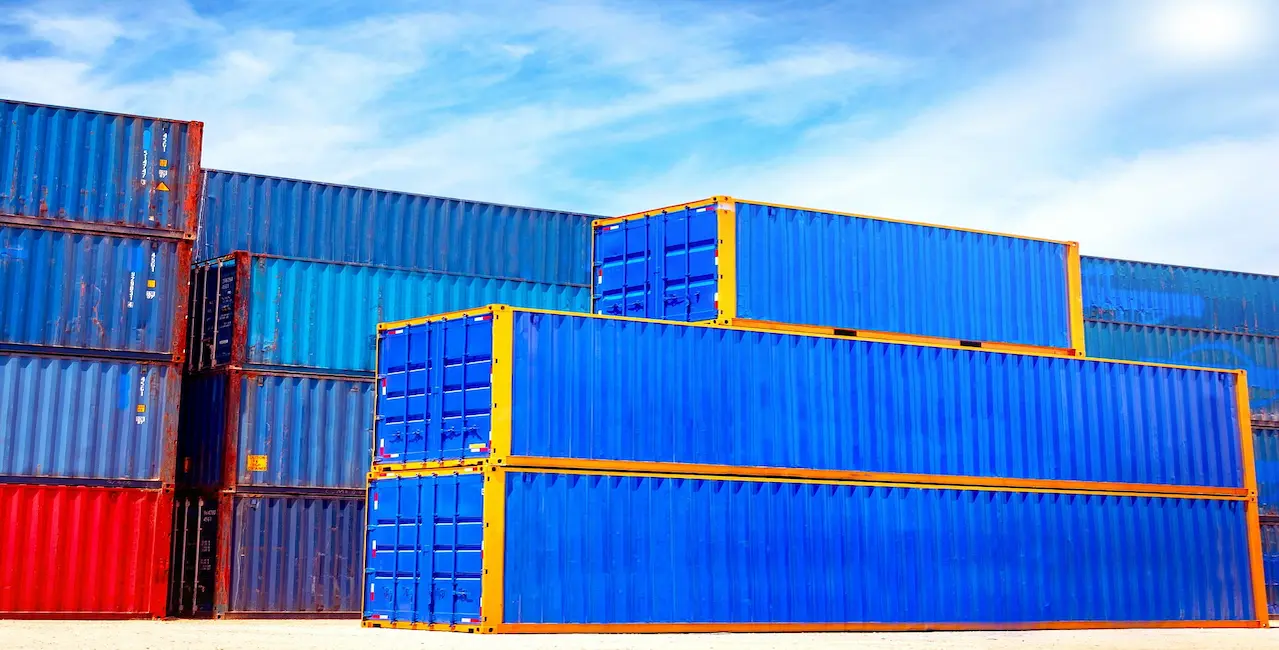
LCL stands for Less Than Container Load. When utilizing containerized shipping, the loading method varies depending on whether the cargo volume is sufficient to fill an entire container (standard 20-foot or 40-foot units). In cases where the shipment is insufficient to fill a full container, cargo from multiple shippers is consolidated to share the space within a single unit—this is known as LCL. Shippers deliver their goods to a designated Container Freight Station (CFS) or bonded warehouse, where shipments are grouped based on their destination; for this reason, LCL is often referred to as “CFS Cargo.”
A standard 20-foot container measures approximately 2.3m wide × 6m long × 2.4m high, while a 40-foot container is roughly 2.3m wide × 12m long × 2.4m high (with “high-cube” containers reaching a height of 2.7m). Weight limits are approximately 20 tons for a 20-foot container and 25 tons for a 40-foot container.
Because LCL involves consolidated cargo, export shipments must be gathered at a single location for “stuffing” into the container before boarding the vessel. Conversely, for imports, the container must be opened for “stripping” and sorting after discharge. Customs clearance and delivery procedures are also conducted at the CFS, after which the goods are transported to their final destination via truck or other means.
Since LCL involves sharing space with other shippers, certain restrictions apply. Cargo that requires temperature control (such as frozen goods), bulk commodities (like grain or raw materials), or odorous goods that might contaminate other shipments are generally unsuitable for LCL. Shippers should take these factors into account when planning their logistics strategy.
More information about our Pallet Rental Service
https://upr-vietnam.vn/en/products/logistics/rental_pallet/
Differences between LCL and FCL
In contrast to LCL, which involves consolidating cargo, FCL (Full Container Load) is a shipping method where a single shipper leases an entire container. FCL is also commonly referred to as a “full container” or “CY cargo.”
Essentially, FCL involves transporting an intact container to a designated location without it being opened during transit. After the cargo is loaded into the container (a process known as “vanning”), the unit undergoes import-export procedures and is handled at the Container Yard (CY). If the cargo volume is small, it must be securely fastened and braced inside the container to prevent damage caused by movement during transport.
Both LCL and FCL shipments can be processed through port facilities or a CFS. At port facilities, after customs clearance at the shipping agent’s bonded warehouse, cargo is moved into the CFS; cargo that arrives directly at the CFS after clearance is subsequently moved to the Container Yard. In the case of LCL, the container is opened at the destination port’s CFS for sorting, after which the goods are transferred to trucks or other vehicles depending on the final destination.
It is important to note that in some countries or ports, CFS facilities may not be fully equipped, which increases the risk of cargo damage or loss during the sorting process. When deciding between FCL and LCL, these factors should be carefully considered to ensure the most appropriate choice for your logistics needs.
Advantages and disadvantages of LCL
The primary advantage of LCL is the ability to transport small shipments via ocean freight at a lower cost. However, there are notable disadvantages, including restrictions on certain types of goods due to their inherent characteristics. Furthermore, in some countries or ports, CFS facilities may be underdeveloped, posing a significant risk of cargo damage or loss during the sorting process.
Additionally, cargo handling practices can fluctuate depending on the timing of the shipment. For instance, cargo backlogs are common following long local holidays. During such peak periods, handling may become less careful, increasing the risk of damage. Consequently, there is always a potential risk to the cargo’s integrity until it reaches the importer.
With LCL, surcharges may apply based on the dimensions and weight of the goods. Generally, surcharges are triggered for long items (over 3m), tall items (over 2.2m), or heavy items (over 2 tons). While stacking is standard practice in container shipping, additional fees will be incurred if the cargo cannot be stacked due to its packaging or irregular shape.
Moreover, LCL requires an extra “devanning” step (unloading from the container), which typically results in a delivery lead time that is approximately two days longer than that of FCL.
Advantages and disadvantages of FCL
The primary advantage of FCL is that it eliminates the need for cargo consolidation or sorting, allowing for faster customs clearance compared to LCL and significantly shortening delivery lead times. Since the container remains sealed and is not opened during transit, the risks of theft or cargo damage are also considerably lower.
However, the disadvantage is that FCL requires a certain minimum volume of cargo. If the shipment is insufficient to fill a container, the cost per unit may be higher than LCL. Additionally, after customs clearance, the entire container is transported to the designated warehouse using a specialized truck known as a “dray” (or dolly), and a round-trip charge for transport between the port and the destination is typically applied as part of the drayage fees.
Tips for Choosing Between LCL and FCL
The choice between LCL and FCL should be evaluated based on total costs and the specific nature of your cargo.
LCL (Less than Container Load) is billed based on whichever is greater: weight or volume, measured in RT (Revenue Tons = CBM). A minimum charge of 1 CBM or 1 ton applies regardless of how small the shipment is. For example, dense metal goods are typically charged by weight, while bulky items like bedding are charged by volume. Additionally, LCL incurs CFS charges for the handling and consolidation of goods into the container.
FCL (Full Container Load) is billed per container unit. It is important to note that the cost of a 20-foot container is not simply half that of a 40-foot container; in some cases, it can reach up to 90% of the 40-foot rate. FCL also requires specialized trucking (drayage/dolly) between the port and the warehouse, which includes a round-trip fee that must be factored into the total cost.
Specifically, if your cargo volume exceeds the following thresholds, switching to FCL may be more cost-effective:
-
20-foot Container: Over 5–7 CBM
-
40-foot Container: Over 8–10 CBM
-
Note: Costs may vary depending on the commodity and container type, so prior verification is essential.
Under Incoterms—the standard rules for international trade—special attention is required for CIF (Cost, Insurance, and Freight) terms. In this case, the exporter only covers domestic transport and ocean freight. If shipping via LCL, the CFS charges at the destination port are the responsibility of the importer. This detail should be carefully considered during contract negotiations.
When calculating cargo volume, use the formula: (Unit box volume × Total quantity). If goods are palletized, the volume of the pallets must be added. For reference, the typical “dead space” in a 20-foot container is approximately 12 CBM.
Deciding between LCL and FCL is not just about volume; you must also consider the risk of cargo damage, the required lead time, and destination fees. Generally, FCL (Full Container Load) offers better protection against damage and allows for faster cargo release.
Finally, always compare the CFS charge (associated with LCL shipments) against the THC (Terminal Handling Charge), which is applied per container unit. Evaluating these terminal fees alongside your shipping method is key to optimizing your logistics budget.
Summary
For small cargo volumes, LCL is the more cost-effective option for international shipping. However, once the volume reaches a certain threshold, FCL offers better cost efficiency. Therefore, a detailed cost calculation is essential before making a decision. Additionally, even for the same export shipment, the optimal choice between LCL and FCL may vary depending on the specific port of destination.
Contact us
Cho thuê Pallet và Kệ | Công ty TNHH UPR Việt Nam > Columns > Logistics > What is LCL? Understanding the Differences Between LCL and FCL [Logistics Terminology]
 Zalo
Zalo  Contact Us