
Wooden Pallets for Exporting Agricultural Products to the US and EU Markets: Standards and Customs Clearance Solutions
Contents
The US and the European Union (EU) are top high-value export markets for Vietnamese agricultural products. However, they are also among the most stringent regulatory environments in the world. Aside from agricultural product quality, auxiliary packaging materials like wooden pallets and dunnage are crucial factors determining whether a shipment clears customs smoothly. Non-compliance with phytosanitary regulations in these markets can lead to customs detention, causing severe financial losses for exporters.
Pallet Size Standards for Exporting to the US and EU
Supply chain and warehousing systems in the US and EU are highly automated. Major supermarkets and distribution centers in these regions require absolute uniformity in packaging and pallet specifications to match their specialized automated forklifts and warehouse racking systems.
-
US Export Standards (GMA Standard): The US market prefers the 1219 x 1016 mm size (equivalent to 48 x 40 inches). This is the dominant standard in North American trade. Vietnam’s 1000 x 1200 mm size is still accepted inside shipping containers, but exporters must verify with US buyers beforehand to ensure their forklifts can handle it.
-
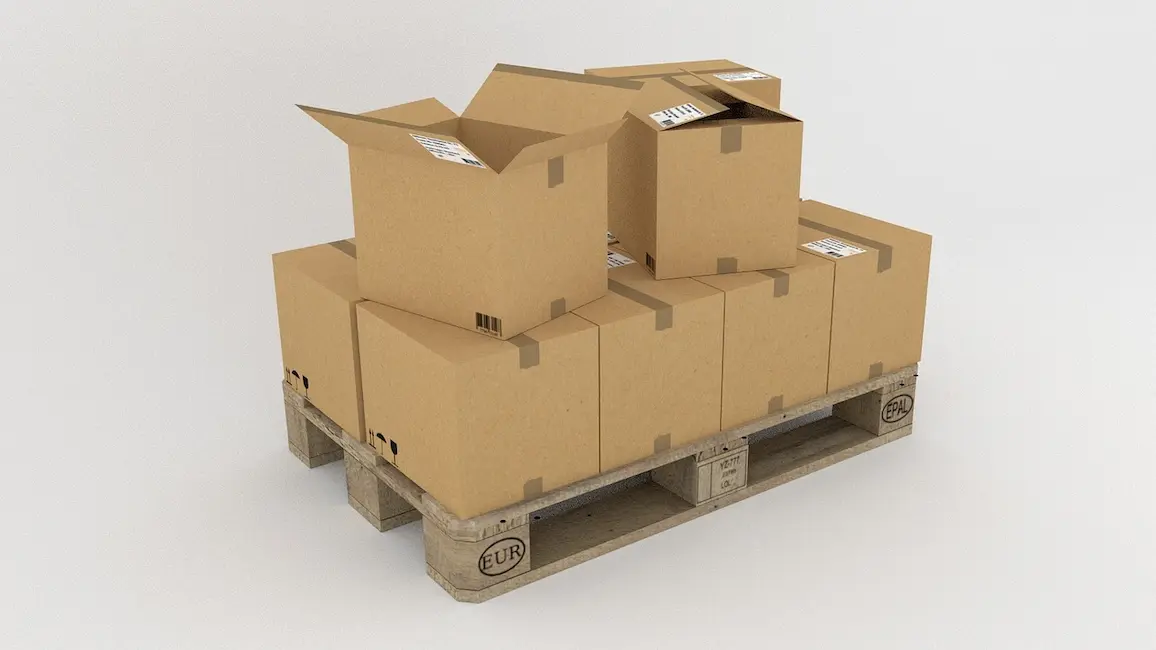
EU Export Standards (Euro Pallet – EPAL): The 800 x 1200 mm size is mandatory for most domestic distribution within Europe. Using the wrong size will force manual unloading to transfer goods to compliant pallets at the destination port, causing extra labor costs and longer transit delays.
-
Wood Material and Moisture Requirements: Sea freight to the US and EU typically takes 20 to 40 days in sealed refrigerated containers, a high-risk environment for mold growth. Exporters should prioritize Acacia wood due to its hardness and fast moisture dissipation. If Pine wood is used, the pallets must undergo technical kiln-drying to reduce moisture content below 20% before loading.
International Phytosanitary Regulations (ISPM 15)
The US Animal and Plant Health Inspection Service (USDA-APHIS) and the European Food Safety Authority (EFSA) strictly monitor Wood Packaging Material (WPM) to prevent invasive alien species from harming local ecosystems. The international ISPM 15 standard is a mandatory requirement for all wooden pallets entering the US and EU.
-
Heat Treatment (HT): This is the most preferred method by both the US and EU. Wood used for pallets must be heated until its core temperature reaches at least 56°C for a continuous minimum of 30 minutes to kill all pests and parasites.
-
Restrictions on Chemical Fumigation: Fumigation using Methyl Bromide (MB) is banned in the EU and heavily restricted in the US due to environmental and safety regulations. Vietnamese exporters should switch completely to HT heat treatment to ensure full legal compliance.
-
Strict Debarking Requirement: All export wooden pallets must be completely debarked before heat treatment to prevent insects from re-infesting under the bark.
-
IPPC Certification Mark: Every compliant pallet must be clearly and permanently stamped with the IPPC “wheat stalk” logo, showing the country code (VN), the authorized treatment provider’s unique code, and the treatment method symbol (HT).
Consequences of Phytosanitary Non-Compliance
At major gateway ports in the US (such as Los Angeles, Long Beach, New York) and the EU (such as Rotterdam, Antwerp), customs and phytosanitary officers inspect cargo rigorously. Detecting even a single wooden pallet with signs of pests, mold, or a missing IPPC stamp can trigger major losses for the exporter:
-
Demurrage and Cargo Damage: The shipment will be detained in quarantine for deep inspection. Customs delays directly cause spoilage or degradation in fresh produce or dried agricultural products.
-
Mandatory Re-export or Destruction: US and EU customs authorities have the right to force the exporter to ship the entire cargo back to Vietnam or destroy it locally. The cost of either option often exceeds the commercial value of the cargo itself.
-
Risk of Blacklisting: Repeated phytosanitary violations will land the exporter or the exporting country on a warning list. This leads to mandatory 100% physical inspections for all future shipments, drastically increasing logistics time and costs.
Alternative Solutions: Coir Pallets or Plastic Pallets
To proactively bypass the strict technical barriers of wood, smart agricultural exporters in Vietnam are adopting alternative pallets that fall outside the scope of ISPM 15:
-
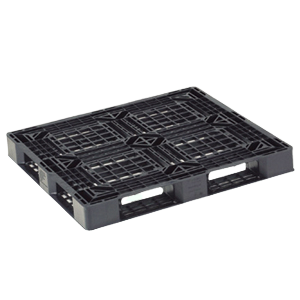
Industrial Plastic Pallets: Plastic is non-porous, entirely waterproof, and inherently exempt from ISPM 15 phytosanitary procedures. For agricultural goods, plastic pallets provide a clean, sterile, and uniform platform. They completely eliminate the risk of cross-contamination from mold or pests, ensuring food safety compliance upon arrival in the US and EU.
-
Coco Coir / Molded Compressed Wood Pallets: This sustainable solution utilizes Vietnam’s abundant agricultural by-products. Subjected to high pressure and temperature during manufacturing, these pallets are naturally pest-free and automatically compliant for clearance. They are highly favored in the EU and US markets due to their eco-friendliness and recyclability under ESG standards.
Strategic Recommendations for Exporters
To safeguard supply chains and optimize logistics costs when exporting agricultural products to high-standard markets, Vietnamese enterprises should execute the following strategic actions:
-
Conduct Total Audits on Packaging Materials: Phytosanitary risks often stem from “hidden” wood components inside the container, such as dunnage, blocks, or bracing wood. Ensure 100% of wood materials inside the container are certified and carry uniform IPPC stamps.
-
Strictly Verify Documentation: Always require pallet suppliers to provide full, valid heat-treatment certificates. Work closely with your freight forwarder to stay updated on the latest food safety and phytosanitary changes from the USDA (US) and EFSA (Europe).
-
Synchronize Operations with UPR Vietnam: Partnering with UPR Vietnam grants businesses access to standardized, high-performance pallet solutions that fully comply with international regulations from day one. When your packaging foundation is compliant, your agricultural shipments will move at optimal speed, minimizing any risk of border bottlenecks.
Conclusion
In the journey to bring Vietnamese agricultural products into high-value distribution chains in the US and Europe, auxiliary packaging and pallets are not just containers—they are your passport to smooth customs clearance. Ensuring strict compliance with international phytosanitary standards or proactively transitioning to alternative materials like plastic or coir pallets is the definitive solution to protect your business from costly border delays.
By partnering with UPR Vietnam, exporters are equipped with standardized, globally compliant pallet solutions right from the factory packing stage. A synchronized and compliant logistics infrastructure allows your agricultural products to move with optimal speed, minimize unexpected costs, and build a lasting brand reputation in international markets.
Contact us for more information about our service
Cho thuê Pallet và Kệ | Công ty TNHH UPR Việt Nam > Columns > Logistics > Wooden Pallets for Exporting Agricultural Products to the US and EU Markets: Standards and Customs Clearance Solutions
 Zalo
Zalo  Contact Us