
What is Assort? Understanding Its Meaning Across Industries [Logistics Terminology]
Contents
What is Assort?
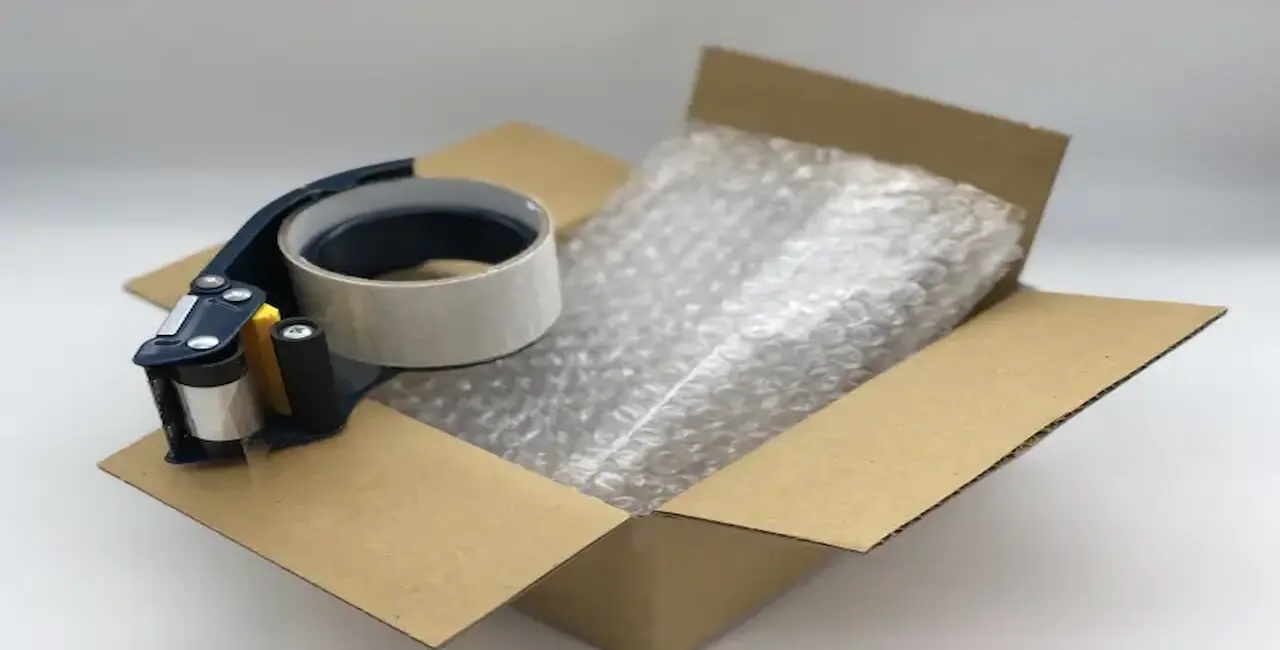
The term “Assort” refers to an “assorted package,” but within the logistics industry—specifically at warehouses and distribution centers—it is a technical term used during the receiving and shipping processes. Specifically, it refers to the process of sorting and packing goods according to specific requirements. This process ensures that goods are accurately prepared based on customer orders and transported efficiently.
The word “Assort” is derived from the English term “assorted,” meaning “classified” or “varied.” In practice, the usage of this term can vary across different industries; however, in a logistics context, it primarily signifies “sorting” or “picking and packing.”
Assort Across Different Industries
Logistics Industry
While “Assort” originally means a “mixed package,” in the modern logistics sector—especially within E-commerce—the term “assortment work” has become a standard. This refers to the process of sorting incoming goods into designated storage locations and, during the outbound phase, combining various items according to specific orders for final packaging.
Apparel Industry
In the apparel industry, “assort” refers to product variety or product structure. It involves selecting items that meet customer needs based on brand, size, design, patterns, colors, materials, and price points. Decisions are then made on how to “assort” these products to create a balanced collection.
Snowboarding Industry
For snowboards, which come in numerous colors and types, it is common to see a disclaimer on E-commerce sites stating that “base colors are assorted.” This means you might receive a board with the base colors reversed compared to the sample image. During manufacturing, base plates are often produced by die-cutting two colors of material; to minimize waste, two versions with inverted colors are created. This sustainable practice is called “assortment,” and since customers cannot predict which colorway they will receive, a clear note is required.
Confectionery Industry
In the confectionery industry, “assort” signifies a “mixed product pack.” These are packages containing various types of sweets, which may consist solely of the company’s own products or include items sourced from other manufacturers. In this field, “assort” is used both as an adjective, such as an “assort pack,” and as a noun, “assortment.”
Rental of Pallets and Other Logistics Equipment
We provide a comprehensive range of rental solutions, including pallets for transportation and storage, various racking systems, corner guards, nesting racks, nesting rack covers, hand trucks (roll cages), and more.
More information about our Pallet Rental service
https://upr-vietnam.vn/en/products/logistics/rental_pallet/
Assort Picking
In the logistics industry, Assort and Picking are closely interconnected. Without accurately collecting the correct item names and quantities as displayed on a picking list or a worker’s handheld device, the “assortment” (order preparation) process cannot be completed. Picking, the stage preceding assortment, is primarily divided into two methods: “Order Picking” and “Batch Picking.”
“Order Picking” (Single Picking)
This is the method of collecting goods for each individual shipping destination. Also known as “Single Picking” or “Order Picking,” it is highly suitable for shipping a wide variety of products in small quantities to numerous delivery points.
“Batch Picking” (The Assort Method)
This is a two-stage picking process: first, goods are collected in “batches” (grouped by item), and then they are re-sorted by individual destination at a processing area. Often referred to as the “Assort Method,” this approach is extremely efficient when shipping small quantities to a limited number of delivery points. By consolidating the initial collection phase, workers avoid multiple trips to the storage area, significantly reducing travel distance and time.
Types of Picking Methods
Various picking methods are employed to optimize warehouse operations:
List Picking
This is a manual method using an outbound order form or a picking list. Workers confirm the item names and quantities on the list and search for them in the storage area. As the most basic method, it is prone to human error and heavily dependent on the worker’s skill and speed; therefore, a final check before packaging is essential.
Digital Picking System (DPS)
In this system, digital displays are mounted on the storage racks to guide workers. Depending on the setup, indicator lights signal the exact location and the required quantity to be picked. This makes the process easy even for inexperienced staff, significantly reducing errors, increasing speed, and saving paper.
Barcode Picking
By using a picking list equipped with barcodes, workers scan items using a handheld terminal and follow digital instructions. When integrated with a Warehouse Management System (WMS), the device will alert the worker via sound or vibration if the wrong product or quantity is selected, effectively minimizing mistakes.
Voice Picking System
Instead of using physical lists, workers use headsets to receive picking instructions via voice commands. This “hands-free” approach allows workers to focus entirely on handling the goods, improving safety and ergonomics.
Cart Picking
This method utilizes specialized picking carts equipped with monitors that display product images and information. Workers follow the visual instructions on the cart to collect items efficiently.
RFID Picking
This advanced method involves attaching RFID tags to products or shelf displays. When a worker reaches for an item, the system automatically reads the RFID tag to verify if the product is correct, ensuring high precision in real-time.
Assorted Orders
In logistics, there are also cases involving “assorted orders.” An assorted order refers to a “non-specific package” where purchasing items in a random combination helps reduce the purchase price.
For example, when ordering 100 T-shirts in various colors such as red, white, blue, and green, an order placed as a “random mix of 100 units” is a prime example of an assorted order. Although the buyer cannot specify the exact quantity for each detail, this random purchasing method allows wholesalers and retailers to lower their cost of goods sold.
The Difference Between “Assort” and “Random”
As introduced in the section on the confectionery industry, an assorted order can sometimes involve a “random combination of colors,” but it is important to note that “Assort” and “Random” are two distinct terms.
“Assort” (or Assortment) signifies a “mixed package” or a “collection”—implying a deliberate grouping of diverse items. In contrast, “Random” acts as a noun or adjective meaning “arbitrary” or “by chance.” Making a random selection means “choosing without a specific rule or pattern.” Understanding this distinction is crucial for accurate communication and professional usage in logistics and commerce.
Picking Support Equipment in Logistics
Picking is often the most labor-intensive and time-consuming task within a logistics center. By integrating external equipment and technology to support this work, overall logistics productivity can be significantly enhanced. Today, manufacturers offer a wide variety of advanced picking support devices.
A prime example is the “Digital Picking System (DPS),” which utilizes digital displays mounted on storage racks to guide workers. Indicator lights direct the worker to the exact location and specify the quantity to be picked, ensuring high accuracy even for staff who may not be familiar with the products.
Furthermore, Automated Mobile Robots (AMR) that transport storage racks directly to a picking station (similar to the system pioneered by Amazon) are gaining significant attention. These robots move the entire rack to where the worker is stationed, allowing for rapid and efficient picking without the need for travel. In Japan, this system was first introduced in December 2016, today, more than 1 million units are operational across over 25 locations worldwide. This robotic technology is currently being widely commercialized both domestically and internationally.
Summary
With the continuous expansion of the E-commerce (EC) market, leading to an increase in both product variety and order complexity, the importance of post-picking assortment has never been greater. Executing this process accurately, error-free, and swiftly has a direct impact on overall logistics productivity. When optimizing internal logistics operations, this is undoubtedly a critical factor that cannot be overlooked.
Contact us
Cho thuê Pallet và Kệ | Công ty TNHH UPR Việt Nam > Columns > Logistics > What is Assort? Understanding Its Meaning Across Industries [Logistics Terminology]
 Zalo
Zalo  Tel
Tel  Contact Us